Pages

Friday, 8 March 2013

Facebook puts focus on photos in new look; may boost ads

Facebook Inc introduced the biggest change in years to its popular newsfeed on Thursday, with a new look and focus on photos that is expected to make the social network more ad-friendly and may entice users to spend more time on the website.

The changes to the newsfeed, whose look and feel had remained largely unchanged since Facebook's inception, include a division into several sections, with separate areas for photographs and music.

The newsfeed is the ever-changing stream of photos, videos and comments uploaded from friends, and is the first page most users see upon logging in.

Facebook Chief Executive Mark Zuckerberg said the makeover was part of an effort to position the social network as a "personalized newspaper," complete with different sections for users to explore.

It comes with a revamped interface that gives more prominence to visual media, such as photos and videos.

The makeover comes roughly a month after Facebook introduced a new social search feature it dubbed "graph search" that makes it easier for the social network's more than 1 billion users to discover more content on the social network.

The much-needed changes unveiled on Thursday, which standardize the network's look across different types of desktop and mobile devices, bring Facebook up-to-date as Google+, the much younger social network started by Google Inc, begins to incorporate more video and images.

"This is just going to provide more opportunity for people to click around and stick around," said Brian Blau, an analyst with industry research firm Gartner, about the revamped newsfeed.

"The newsfeed was kind of outdated. This sort of brings it up to maybe what's comparable to...their competition, and partner sites that are focusing on media and richness."

Facebook's newsfeed is one of three "pillars" of the service, along with search and user profiles.

The updated newsfeed provides more space for the photos and videos that users share on the network, and provides a more consistent look and feel between the version for PCs and for mobile devices such as smartphones and tablets. The changes will begin rolling out in limited fashion from Thursday, Facebook said.

Facebook executives say the updates will help keep organized the increasing jumble of content available on the social network as its user base grows.

The last major update to the feature occurred in September 2011. Since then, the company has incorporated ads directly into the feed and has shifted its focus to creating "mobile-first experiences," because more people now access the social network from smartphones than from desktop computers.

FACEBOOK VERSUS GOOGLE

Marketers will be able to fashion more compelling ads thanks to the increased real estate for photos, said Hussein Fazal, the chief executive of AdParlor, a firm that helps companies advertise on Facebook. "Larger images will result in higher click through-rates, a higher level of engagement and better performance," Fazal wrote in an email.

Still, analysts say the company needs to tread carefully to avoid inundating users' various feeds with advertising, as Facebook tries to sustain a rapid pace of growth that helped it debut on public markets at the highest-ever valuation for a technology company.

The world's largest social network is moving to regain Wall Street's confidence after its botched IPO last year, addressing concerns about its long-term prospects - many of which center on an industry-wide shift toward the use of mobile devices.

Facebook shares, which are still more than a quarter off their IPO price of $38, closed up 4 percent at $28.57 on Thursday on the Nasdaq.

Facebook and Google, which both got their start on desktop computers, are now managing a transition of their products onto smartphones and tablets, which typically yield less revenue than on PCs.

The two Internet mainstays are also waging a war for revenue in mobile advertising - a market that is still small compared with the traditional desktop but that is growing exponentially.

In terms of overall mobile advertising, Google commanded a 53.5 percent share in 2012, aided by its dominance in search-based ads. Facebook had just 8.4 percent, a distant runner-up, according to estimates from research house eMarketer.

But in terms of mobile display ad sales, Facebook narrowly edges out its rival with 18.4 percent of the market versus Google's 17 percent, the research outfit estimated.

PRESSURE ON THE SYSTEM

The makeover is partly prompted by complaints about increasing clutter on Facebook's network.

As Facebook has grown to more than 1 billion users, the amount of content that users and companies post to the website has surged. Facebook users only see a small portion of that content, culled by Facebook's proprietary algorithm.

In recent months, some companies and users, including entrepreneur Mark Cuban, have grumbled that their content was not getting enough exposure in the newsfeed, because Facebook gives paid ads priority in the newsfeed.

Facebook's vice president of product, Chris Cox, acknowledged that there was "more pressure on the system" to feature the various content, as Facebook has grown in size.

The additional newsfeeds provide more opportunities for content to appear in front of users. A photos-only feed displays pictures shared by a user's connections on Facebook as well as on Facebook-owned Instagram and other photo apps that are integrated with the social network.

A revamped version of an existing but little-used Music feed aggregates the songs that a user's friends are listening to, and includes posts from bands and performers in which a user has expressed an interest.

Facebook also introduced a "Friends Only" feed that displays every message shared by a user's friends in chronological order -- rather than chosen by an algorithm -- as well as a "Following" feed that gathers posts from news publishers, celebrities, sports teams and other groups or businesses that a user subscribes to.

"The basic idea is sometimes you want five minutes and you want to see the top stuff, sometimes you want to spend an hour and go through a lot of different stuff," Cox said in an interview after the event.

The additional feeds could also provide Facebook with more space to offer ads on its newsfeed, though a spokeswoman said the additional news feeds would not initially feature ads.

Facebook puts focus on photos in new look; may boost ads

Facebook Inc introduced the biggest change in years to its popular newsfeed on Thursday, with a new look and focus on photos that is expected to make the social network more ad-friendly and may entice users to spend more time on the website.

The changes to the newsfeed, whose look and feel had remained largely unchanged since Facebook's inception, include a division into several sections, with separate areas for photographs and music.

The newsfeed is the ever-changing stream of photos, videos and comments uploaded from friends, and is the first page most users see upon logging in.

Facebook Chief Executive Mark Zuckerberg said the makeover was part of an effort to position the social network as a "personalized newspaper," complete with different sections for users to explore.

It comes with a revamped interface that gives more prominence to visual media, such as photos and videos.

The makeover comes roughly a month after Facebook introduced a new social search feature it dubbed "graph search" that makes it easier for the social network's more than 1 billion users to discover more content on the social network.

The much-needed changes unveiled on Thursday, which standardize the network's look across different types of desktop and mobile devices, bring Facebook up-to-date as Google+, the much younger social network started by Google Inc, begins to incorporate more video and images.

"This is just going to provide more opportunity for people to click around and stick around," said Brian Blau, an analyst with industry research firm Gartner, about the revamped newsfeed.

"The newsfeed was kind of outdated. This sort of brings it up to maybe what's comparable to...their competition, and partner sites that are focusing on media and richness."

Facebook's newsfeed is one of three "pillars" of the service, along with search and user profiles.

The updated newsfeed provides more space for the photos and videos that users share on the network, and provides a more consistent look and feel between the version for PCs and for mobile devices such as smartphones and tablets. The changes will begin rolling out in limited fashion from Thursday, Facebook said.

Facebook executives say the updates will help keep organized the increasing jumble of content available on the social network as its user base grows.

The last major update to the feature occurred in September 2011. Since then, the company has incorporated ads directly into the feed and has shifted its focus to creating "mobile-first experiences," because more people now access the social network from smartphones than from desktop computers.

FACEBOOK VERSUS GOOGLE

Marketers will be able to fashion more compelling ads thanks to the increased real estate for photos, said Hussein Fazal, the chief executive of AdParlor, a firm that helps companies advertise on Facebook. "Larger images will result in higher click through-rates, a higher level of engagement and better performance," Fazal wrote in an email.

Still, analysts say the company needs to tread carefully to avoid inundating users' various feeds with advertising, as Facebook tries to sustain a rapid pace of growth that helped it debut on public markets at the highest-ever valuation for a technology company.

The world's largest social network is moving to regain Wall Street's confidence after its botched IPO last year, addressing concerns about its long-term prospects - many of which center on an industry-wide shift toward the use of mobile devices.

Facebook shares, which are still more than a quarter off their IPO price of $38, closed up 4 percent at $28.57 on Thursday on the Nasdaq.

Facebook and Google, which both got their start on desktop computers, are now managing a transition of their products onto smartphones and tablets, which typically yield less revenue than on PCs.

The two Internet mainstays are also waging a war for revenue in mobile advertising - a market that is still small compared with the traditional desktop but that is growing exponentially.

In terms of overall mobile advertising, Google commanded a 53.5 percent share in 2012, aided by its dominance in search-based ads. Facebook had just 8.4 percent, a distant runner-up, according to estimates from research house eMarketer.

But in terms of mobile display ad sales, Facebook narrowly edges out its rival with 18.4 percent of the market versus Google's 17 percent, the research outfit estimated.

PRESSURE ON THE SYSTEM

The makeover is partly prompted by complaints about increasing clutter on Facebook's network.

As Facebook has grown to more than 1 billion users, the amount of content that users and companies post to the website has surged. Facebook users only see a small portion of that content, culled by Facebook's proprietary algorithm.

In recent months, some companies and users, including entrepreneur Mark Cuban, have grumbled that their content was not getting enough exposure in the newsfeed, because Facebook gives paid ads priority in the newsfeed.

Facebook's vice president of product, Chris Cox, acknowledged that there was "more pressure on the system" to feature the various content, as Facebook has grown in size.

The additional newsfeeds provide more opportunities for content to appear in front of users. A photos-only feed displays pictures shared by a user's connections on Facebook as well as on Facebook-owned Instagram and other photo apps that are integrated with the social network.

A revamped version of an existing but little-used Music feed aggregates the songs that a user's friends are listening to, and includes posts from bands and performers in which a user has expressed an interest.

Facebook also introduced a "Friends Only" feed that displays every message shared by a user's friends in chronological order -- rather than chosen by an algorithm -- as well as a "Following" feed that gathers posts from news publishers, celebrities, sports teams and other groups or businesses that a user subscribes to.

"The basic idea is sometimes you want five minutes and you want to see the top stuff, sometimes you want to spend an hour and go through a lot of different stuff," Cox said in an interview after the event.

The additional feeds could also provide Facebook with more space to offer ads on its newsfeed, though a spokeswoman said the additional news feeds would not initially feature ads.

Facebook puts focus on photos in new look; may boost ads

Facebook Inc introduced the biggest change in years to its popular newsfeed on Thursday, with a new look and focus on photos that is expected to make the social network more ad-friendly and may entice users to spend more time on the website.

The changes to the newsfeed, whose look and feel had remained largely unchanged since Facebook's inception, include a division into several sections, with separate areas for photographs and music.

The newsfeed is the ever-changing stream of photos, videos and comments uploaded from friends, and is the first page most users see upon logging in.

Facebook Chief Executive Mark Zuckerberg said the makeover was part of an effort to position the social network as a "personalized newspaper," complete with different sections for users to explore.

It comes with a revamped interface that gives more prominence to visual media, such as photos and videos.

The makeover comes roughly a month after Facebook introduced a new social search feature it dubbed "graph search" that makes it easier for the social network's more than 1 billion users to discover more content on the social network.

The much-needed changes unveiled on Thursday, which standardize the network's look across different types of desktop and mobile devices, bring Facebook up-to-date as Google+, the much younger social network started by Google Inc, begins to incorporate more video and images.

"This is just going to provide more opportunity for people to click around and stick around," said Brian Blau, an analyst with industry research firm Gartner, about the revamped newsfeed.

"The newsfeed was kind of outdated. This sort of brings it up to maybe what's comparable to...their competition, and partner sites that are focusing on media and richness."

Facebook's newsfeed is one of three "pillars" of the service, along with search and user profiles.

The updated newsfeed provides more space for the photos and videos that users share on the network, and provides a more consistent look and feel between the version for PCs and for mobile devices such as smartphones and tablets. The changes will begin rolling out in limited fashion from Thursday, Facebook said.

Facebook executives say the updates will help keep organized the increasing jumble of content available on the social network as its user base grows.

The last major update to the feature occurred in September 2011. Since then, the company has incorporated ads directly into the feed and has shifted its focus to creating "mobile-first experiences," because more people now access the social network from smartphones than from desktop computers.

FACEBOOK VERSUS GOOGLE

Marketers will be able to fashion more compelling ads thanks to the increased real estate for photos, said Hussein Fazal, the chief executive of AdParlor, a firm that helps companies advertise on Facebook. "Larger images will result in higher click through-rates, a higher level of engagement and better performance," Fazal wrote in an email.

Still, analysts say the company needs to tread carefully to avoid inundating users' various feeds with advertising, as Facebook tries to sustain a rapid pace of growth that helped it debut on public markets at the highest-ever valuation for a technology company.

The world's largest social network is moving to regain Wall Street's confidence after its botched IPO last year, addressing concerns about its long-term prospects - many of which center on an industry-wide shift toward the use of mobile devices.

Facebook shares, which are still more than a quarter off their IPO price of $38, closed up 4 percent at $28.57 on Thursday on the Nasdaq.

Facebook and Google, which both got their start on desktop computers, are now managing a transition of their products onto smartphones and tablets, which typically yield less revenue than on PCs.

The two Internet mainstays are also waging a war for revenue in mobile advertising - a market that is still small compared with the traditional desktop but that is growing exponentially.

In terms of overall mobile advertising, Google commanded a 53.5 percent share in 2012, aided by its dominance in search-based ads. Facebook had just 8.4 percent, a distant runner-up, according to estimates from research house eMarketer.

But in terms of mobile display ad sales, Facebook narrowly edges out its rival with 18.4 percent of the market versus Google's 17 percent, the research outfit estimated.

PRESSURE ON THE SYSTEM

The makeover is partly prompted by complaints about increasing clutter on Facebook's network.

As Facebook has grown to more than 1 billion users, the amount of content that users and companies post to the website has surged. Facebook users only see a small portion of that content, culled by Facebook's proprietary algorithm.

In recent months, some companies and users, including entrepreneur Mark Cuban, have grumbled that their content was not getting enough exposure in the newsfeed, because Facebook gives paid ads priority in the newsfeed.

Facebook's vice president of product, Chris Cox, acknowledged that there was "more pressure on the system" to feature the various content, as Facebook has grown in size.

The additional newsfeeds provide more opportunities for content to appear in front of users. A photos-only feed displays pictures shared by a user's connections on Facebook as well as on Facebook-owned Instagram and other photo apps that are integrated with the social network.

A revamped version of an existing but little-used Music feed aggregates the songs that a user's friends are listening to, and includes posts from bands and performers in which a user has expressed an interest.

Facebook also introduced a "Friends Only" feed that displays every message shared by a user's friends in chronological order -- rather than chosen by an algorithm -- as well as a "Following" feed that gathers posts from news publishers, celebrities, sports teams and other groups or businesses that a user subscribes to.

"The basic idea is sometimes you want five minutes and you want to see the top stuff, sometimes you want to spend an hour and go through a lot of different stuff," Cox said in an interview after the event.

The additional feeds could also provide Facebook with more space to offer ads on its newsfeed, though a spokeswoman said the additional news feeds would not initially feature ads.

Facebook puts focus on photos in new look; may boost ads

Facebook Inc introduced the biggest change in years to its popular newsfeed on Thursday, with a new look and focus on photos that is expected to make the social network more ad-friendly and may entice users to spend more time on the website.

The changes to the newsfeed, whose look and feel had remained largely unchanged since Facebook's inception, include a division into several sections, with separate areas for photographs and music.

The newsfeed is the ever-changing stream of photos, videos and comments uploaded from friends, and is the first page most users see upon logging in.

Facebook Chief Executive Mark Zuckerberg said the makeover was part of an effort to position the social network as a "personalized newspaper," complete with different sections for users to explore.

It comes with a revamped interface that gives more prominence to visual media, such as photos and videos.

The makeover comes roughly a month after Facebook introduced a new social search feature it dubbed "graph search" that makes it easier for the social network's more than 1 billion users to discover more content on the social network.

The much-needed changes unveiled on Thursday, which standardize the network's look across different types of desktop and mobile devices, bring Facebook up-to-date as Google+, the much younger social network started by Google Inc, begins to incorporate more video and images.

"This is just going to provide more opportunity for people to click around and stick around," said Brian Blau, an analyst with industry research firm Gartner, about the revamped newsfeed.

"The newsfeed was kind of outdated. This sort of brings it up to maybe what's comparable to...their competition, and partner sites that are focusing on media and richness."

Facebook's newsfeed is one of three "pillars" of the service, along with search and user profiles.

The updated newsfeed provides more space for the photos and videos that users share on the network, and provides a more consistent look and feel between the version for PCs and for mobile devices such as smartphones and tablets. The changes will begin rolling out in limited fashion from Thursday, Facebook said.

Facebook executives say the updates will help keep organized the increasing jumble of content available on the social network as its user base grows.

The last major update to the feature occurred in September 2011. Since then, the company has incorporated ads directly into the feed and has shifted its focus to creating "mobile-first experiences," because more people now access the social network from smartphones than from desktop computers.

FACEBOOK VERSUS GOOGLE

Marketers will be able to fashion more compelling ads thanks to the increased real estate for photos, said Hussein Fazal, the chief executive of AdParlor, a firm that helps companies advertise on Facebook. "Larger images will result in higher click through-rates, a higher level of engagement and better performance," Fazal wrote in an email.

Still, analysts say the company needs to tread carefully to avoid inundating users' various feeds with advertising, as Facebook tries to sustain a rapid pace of growth that helped it debut on public markets at the highest-ever valuation for a technology company.

The world's largest social network is moving to regain Wall Street's confidence after its botched IPO last year, addressing concerns about its long-term prospects - many of which center on an industry-wide shift toward the use of mobile devices.

Facebook shares, which are still more than a quarter off their IPO price of $38, closed up 4 percent at $28.57 on Thursday on the Nasdaq.

Facebook and Google, which both got their start on desktop computers, are now managing a transition of their products onto smartphones and tablets, which typically yield less revenue than on PCs.

The two Internet mainstays are also waging a war for revenue in mobile advertising - a market that is still small compared with the traditional desktop but that is growing exponentially.

In terms of overall mobile advertising, Google commanded a 53.5 percent share in 2012, aided by its dominance in search-based ads. Facebook had just 8.4 percent, a distant runner-up, according to estimates from research house eMarketer.

But in terms of mobile display ad sales, Facebook narrowly edges out its rival with 18.4 percent of the market versus Google's 17 percent, the research outfit estimated.

PRESSURE ON THE SYSTEM

The makeover is partly prompted by complaints about increasing clutter on Facebook's network.

As Facebook has grown to more than 1 billion users, the amount of content that users and companies post to the website has surged. Facebook users only see a small portion of that content, culled by Facebook's proprietary algorithm.

In recent months, some companies and users, including entrepreneur Mark Cuban, have grumbled that their content was not getting enough exposure in the newsfeed, because Facebook gives paid ads priority in the newsfeed.

Facebook's vice president of product, Chris Cox, acknowledged that there was "more pressure on the system" to feature the various content, as Facebook has grown in size.

The additional newsfeeds provide more opportunities for content to appear in front of users. A photos-only feed displays pictures shared by a user's connections on Facebook as well as on Facebook-owned Instagram and other photo apps that are integrated with the social network.

A revamped version of an existing but little-used Music feed aggregates the songs that a user's friends are listening to, and includes posts from bands and performers in which a user has expressed an interest.

Facebook also introduced a "Friends Only" feed that displays every message shared by a user's friends in chronological order -- rather than chosen by an algorithm -- as well as a "Following" feed that gathers posts from news publishers, celebrities, sports teams and other groups or businesses that a user subscribes to.

"The basic idea is sometimes you want five minutes and you want to see the top stuff, sometimes you want to spend an hour and go through a lot of different stuff," Cox said in an interview after the event.

The additional feeds could also provide Facebook with more space to offer ads on its newsfeed, though a spokeswoman said the additional news feeds would not initially feature ads.

Facebook puts focus on photos in new look; may boost ads

Facebook Inc introduced the biggest change in years to its popular newsfeed on Thursday, with a new look and focus on photos that is expected to make the social network more ad-friendly and may entice users to spend more time on the website.

The changes to the newsfeed, whose look and feel had remained largely unchanged since Facebook's inception, include a division into several sections, with separate areas for photographs and music.

The newsfeed is the ever-changing stream of photos, videos and comments uploaded from friends, and is the first page most users see upon logging in.

Facebook Chief Executive Mark Zuckerberg said the makeover was part of an effort to position the social network as a "personalized newspaper," complete with different sections for users to explore.

It comes with a revamped interface that gives more prominence to visual media, such as photos and videos.

The makeover comes roughly a month after Facebook introduced a new social search feature it dubbed "graph search" that makes it easier for the social network's more than 1 billion users to discover more content on the social network.

The much-needed changes unveiled on Thursday, which standardize the network's look across different types of desktop and mobile devices, bring Facebook up-to-date as Google+, the much younger social network started by Google Inc, begins to incorporate more video and images.

"This is just going to provide more opportunity for people to click around and stick around," said Brian Blau, an analyst with industry research firm Gartner, about the revamped newsfeed.

"The newsfeed was kind of outdated. This sort of brings it up to maybe what's comparable to...their competition, and partner sites that are focusing on media and richness."

Facebook's newsfeed is one of three "pillars" of the service, along with search and user profiles.

The updated newsfeed provides more space for the photos and videos that users share on the network, and provides a more consistent look and feel between the version for PCs and for mobile devices such as smartphones and tablets. The changes will begin rolling out in limited fashion from Thursday, Facebook said.

Facebook executives say the updates will help keep organized the increasing jumble of content available on the social network as its user base grows.

The last major update to the feature occurred in September 2011. Since then, the company has incorporated ads directly into the feed and has shifted its focus to creating "mobile-first experiences," because more people now access the social network from smartphones than from desktop computers.

FACEBOOK VERSUS GOOGLE

Marketers will be able to fashion more compelling ads thanks to the increased real estate for photos, said Hussein Fazal, the chief executive of AdParlor, a firm that helps companies advertise on Facebook. "Larger images will result in higher click through-rates, a higher level of engagement and better performance," Fazal wrote in an email.

Still, analysts say the company needs to tread carefully to avoid inundating users' various feeds with advertising, as Facebook tries to sustain a rapid pace of growth that helped it debut on public markets at the highest-ever valuation for a technology company.

The world's largest social network is moving to regain Wall Street's confidence after its botched IPO last year, addressing concerns about its long-term prospects - many of which center on an industry-wide shift toward the use of mobile devices.

Facebook shares, which are still more than a quarter off their IPO price of $38, closed up 4 percent at $28.57 on Thursday on the Nasdaq.

Facebook and Google, which both got their start on desktop computers, are now managing a transition of their products onto smartphones and tablets, which typically yield less revenue than on PCs.

The two Internet mainstays are also waging a war for revenue in mobile advertising - a market that is still small compared with the traditional desktop but that is growing exponentially.

In terms of overall mobile advertising, Google commanded a 53.5 percent share in 2012, aided by its dominance in search-based ads. Facebook had just 8.4 percent, a distant runner-up, according to estimates from research house eMarketer.

But in terms of mobile display ad sales, Facebook narrowly edges out its rival with 18.4 percent of the market versus Google's 17 percent, the research outfit estimated.

PRESSURE ON THE SYSTEM

The makeover is partly prompted by complaints about increasing clutter on Facebook's network.

As Facebook has grown to more than 1 billion users, the amount of content that users and companies post to the website has surged. Facebook users only see a small portion of that content, culled by Facebook's proprietary algorithm.

In recent months, some companies and users, including entrepreneur Mark Cuban, have grumbled that their content was not getting enough exposure in the newsfeed, because Facebook gives paid ads priority in the newsfeed.

Facebook's vice president of product, Chris Cox, acknowledged that there was "more pressure on the system" to feature the various content, as Facebook has grown in size.

The additional newsfeeds provide more opportunities for content to appear in front of users. A photos-only feed displays pictures shared by a user's connections on Facebook as well as on Facebook-owned Instagram and other photo apps that are integrated with the social network.

A revamped version of an existing but little-used Music feed aggregates the songs that a user's friends are listening to, and includes posts from bands and performers in which a user has expressed an interest.

Facebook also introduced a "Friends Only" feed that displays every message shared by a user's friends in chronological order -- rather than chosen by an algorithm -- as well as a "Following" feed that gathers posts from news publishers, celebrities, sports teams and other groups or businesses that a user subscribes to.

"The basic idea is sometimes you want five minutes and you want to see the top stuff, sometimes you want to spend an hour and go through a lot of different stuff," Cox said in an interview after the event.

The additional feeds could also provide Facebook with more space to offer ads on its newsfeed, though a spokeswoman said the additional news feeds would not initially feature ads.
Facebook puts focus on photos in new look; may boost ads

Facebook Inc introduced the biggest change in years to its popular newsfeed on Thursday, with a new look and focus on photos that is expected to make the social network more ad-friendly and may entice users to spend more time on the website.

The changes to the newsfeed, whose look and feel had remained largely unchanged since Facebook's inception, include a division into several sections, with separate areas for photographs and music.

The newsfeed is the ever-changing stream of photos, videos and comments uploaded from friends, and is the first page most users see upon logging in.

Facebook Chief Executive Mark Zuckerberg said the makeover was part of an effort to position the social network as a "personalized newspaper," complete with different sections for users to explore.

It comes with a revamped interface that gives more prominence to visual media, such as photos and videos.

The makeover comes roughly a month after Facebook introduced a new social search feature it dubbed "graph search" that makes it easier for the social network's more than 1 billion users to discover more content on the social network.

The much-needed changes unveiled on Thursday, which standardize the network's look across different types of desktop and mobile devices, bring Facebook up-to-date as Google+, the much younger social network started by Google Inc, begins to incorporate more video and images.

"This is just going to provide more opportunity for people to click around and stick around," said Brian Blau, an analyst with industry research firm Gartner, about the revamped newsfeed.

"The newsfeed was kind of outdated. This sort of brings it up to maybe what's comparable to...their competition, and partner sites that are focusing on media and richness."

Facebook's newsfeed is one of three "pillars" of the service, along with search and user profiles.

The updated newsfeed provides more space for the photos and videos that users share on the network, and provides a more consistent look and feel between the version for PCs and for mobile devices such as smartphones and tablets. The changes will begin rolling out in limited fashion from Thursday, Facebook said.

Facebook executives say the updates will help keep organized the increasing jumble of content available on the social network as its user base grows.

The last major update to the feature occurred in September 2011. Since then, the company has incorporated ads directly into the feed and has shifted its focus to creating "mobile-first experiences," because more people now access the social network from smartphones than from desktop computers.

FACEBOOK VERSUS GOOGLE

Marketers will be able to fashion more compelling ads thanks to the increased real estate for photos, said Hussein Fazal, the chief executive of AdParlor, a firm that helps companies advertise on Facebook. "Larger images will result in higher click through-rates, a higher level of engagement and better performance," Fazal wrote in an email.

Still, analysts say the company needs to tread carefully to avoid inundating users' various feeds with advertising, as Facebook tries to sustain a rapid pace of growth that helped it debut on public markets at the highest-ever valuation for a technology company.

The world's largest social network is moving to regain Wall Street's confidence after its botched IPO last year, addressing concerns about its long-term prospects - many of which center on an industry-wide shift toward the use of mobile devices.

Facebook shares, which are still more than a quarter off their IPO price of $38, closed up 4 percent at $28.57 on Thursday on the Nasdaq.

Facebook and Google, which both got their start on desktop computers, are now managing a transition of their products onto smartphones and tablets, which typically yield less revenue than on PCs.

The two Internet mainstays are also waging a war for revenue in mobile advertising - a market that is still small compared with the traditional desktop but that is growing exponentially.

In terms of overall mobile advertising, Google commanded a 53.5 percent share in 2012, aided by its dominance in search-based ads. Facebook had just 8.4 percent, a distant runner-up, according to estimates from research house eMarketer.

But in terms of mobile display ad sales, Facebook narrowly edges out its rival with 18.4 percent of the market versus Google's 17 percent, the research outfit estimated.

PRESSURE ON THE SYSTEM

The makeover is partly prompted by complaints about increasing clutter on Facebook's network.

As Facebook has grown to more than 1 billion users, the amount of content that users and companies post to the website has surged. Facebook users only see a small portion of that content, culled by Facebook's proprietary algorithm.

In recent months, some companies and users, including entrepreneur Mark Cuban, have grumbled that their content was not getting enough exposure in the newsfeed, because Facebook gives paid ads priority in the newsfeed.

Facebook's vice president of product, Chris Cox, acknowledged that there was "more pressure on the system" to feature the various content, as Facebook has grown in size.

The additional newsfeeds provide more opportunities for content to appear in front of users. A photos-only feed displays pictures shared by a user's connections on Facebook as well as on Facebook-owned Instagram and other photo apps that are integrated with the social network.

A revamped version of an existing but little-used Music feed aggregates the songs that a user's friends are listening to, and includes posts from bands and performers in which a user has expressed an interest.

Facebook also introduced a "Friends Only" feed that displays every message shared by a user's friends in chronological order -- rather than chosen by an algorithm -- as well as a "Following" feed that gathers posts from news publishers, celebrities, sports teams and other groups or businesses that a user subscribes to.

"The basic idea is sometimes you want five minutes and you want to see the top stuff, sometimes you want to spend an hour and go through a lot of different stuff," Cox said in an interview after the event.

The additional feeds could also provide Facebook with more space to offer ads on its newsfeed, though a spokeswoman said the additional news feeds would not initially feature ads.

Facebook puts focus on photos in new look; may boost ads

Facebook Inc introduced the biggest change in years to its popular newsfeed on Thursday, with a new look and focus on photos that is expected to make the social network more ad-friendly and may entice users to spend more time on the website.

The changes to the newsfeed, whose look and feel had remained largely unchanged since Facebook's inception, include a division into several sections, with separate areas for photographs and music.

The newsfeed is the ever-changing stream of photos, videos and comments uploaded from friends, and is the first page most users see upon logging in.

Facebook Chief Executive Mark Zuckerberg said the makeover was part of an effort to position the social network as a "personalized newspaper," complete with different sections for users to explore.

It comes with a revamped interface that gives more prominence to visual media, such as photos and videos.

The makeover comes roughly a month after Facebook introduced a new social search feature it dubbed "graph search" that makes it easier for the social network's more than 1 billion users to discover more content on the social network.

The much-needed changes unveiled on Thursday, which standardize the network's look across different types of desktop and mobile devices, bring Facebook up-to-date as Google+, the much younger social network started by Google Inc, begins to incorporate more video and images.

"This is just going to provide more opportunity for people to click around and stick around," said Brian Blau, an analyst with industry research firm Gartner, about the revamped newsfeed.

"The newsfeed was kind of outdated. This sort of brings it up to maybe what's comparable to...their competition, and partner sites that are focusing on media and richness."

Facebook's newsfeed is one of three "pillars" of the service, along with search and user profiles.

The updated newsfeed provides more space for the photos and videos that users share on the network, and provides a more consistent look and feel between the version for PCs and for mobile devices such as smartphones and tablets. The changes will begin rolling out in limited fashion from Thursday, Facebook said.

Facebook executives say the updates will help keep organized the increasing jumble of content available on the social network as its user base grows.

The last major update to the feature occurred in September 2011. Since then, the company has incorporated ads directly into the feed and has shifted its focus to creating "mobile-first experiences," because more people now access the social network from smartphones than from desktop computers.

FACEBOOK VERSUS GOOGLE

Marketers will be able to fashion more compelling ads thanks to the increased real estate for photos, said Hussein Fazal, the chief executive of AdParlor, a firm that helps companies advertise on Facebook. "Larger images will result in higher click through-rates, a higher level of engagement and better performance," Fazal wrote in an email.

Still, analysts say the company needs to tread carefully to avoid inundating users' various feeds with advertising, as Facebook tries to sustain a rapid pace of growth that helped it debut on public markets at the highest-ever valuation for a technology company.

The world's largest social network is moving to regain Wall Street's confidence after its botched IPO last year, addressing concerns about its long-term prospects - many of which center on an industry-wide shift toward the use of mobile devices.

Facebook shares, which are still more than a quarter off their IPO price of $38, closed up 4 percent at $28.57 on Thursday on the Nasdaq.

Facebook and Google, which both got their start on desktop computers, are now managing a transition of their products onto smartphones and tablets, which typically yield less revenue than on PCs.

The two Internet mainstays are also waging a war for revenue in mobile advertising - a market that is still small compared with the traditional desktop but that is growing exponentially.

In terms of overall mobile advertising, Google commanded a 53.5 percent share in 2012, aided by its dominance in search-based ads. Facebook had just 8.4 percent, a distant runner-up, according to estimates from research house eMarketer.

But in terms of mobile display ad sales, Facebook narrowly edges out its rival with 18.4 percent of the market versus Google's 17 percent, the research outfit estimated.

PRESSURE ON THE SYSTEM

The makeover is partly prompted by complaints about increasing clutter on Facebook's network.

As Facebook has grown to more than 1 billion users, the amount of content that users and companies post to the website has surged. Facebook users only see a small portion of that content, culled by Facebook's proprietary algorithm.

In recent months, some companies and users, including entrepreneur Mark Cuban, have grumbled that their content was not getting enough exposure in the newsfeed, because Facebook gives paid ads priority in the newsfeed.

Facebook's vice president of product, Chris Cox, acknowledged that there was "more pressure on the system" to feature the various content, as Facebook has grown in size.

The additional newsfeeds provide more opportunities for content to appear in front of users. A photos-only feed displays pictures shared by a user's connections on Facebook as well as on Facebook-owned Instagram and other photo apps that are integrated with the social network.

A revamped version of an existing but little-used Music feed aggregates the songs that a user's friends are listening to, and includes posts from bands and performers in which a user has expressed an interest.

Facebook also introduced a "Friends Only" feed that displays every message shared by a user's friends in chronological order -- rather than chosen by an algorithm -- as well as a "Following" feed that gathers posts from news publishers, celebrities, sports teams and other groups or businesses that a user subscribes to.

"The basic idea is sometimes you want five minutes and you want to see the top stuff, sometimes you want to spend an hour and go through a lot of different stuff," Cox said in an interview after the event.

The additional feeds could also provide Facebook with more space to offer ads on its newsfeed, though a spokeswoman said the additional news feeds would not initially feature ads.

Thursday, 7 March 2013

How to Add a Custom Background to Browser Homepage

There is no harm in adding a bit of personalization to your PC and I am sure you must have chosen your current Wallpaper on your desktop very carefully.
If you have done that, you might be interested in doing the same in your browser homepage as well. Google.com happens to be the default homepage of Google Chrome, and it also had the feature of letting users add custom backgrounds to their Homepage.
That thing has been closed down by Google but there are still some ways to get that functionality back in working order with the help of third Party extensions.

On Google Chrome

Background in Chrome How to Add a Custom Background to Browser Homepage
Custom Google Background can be helpful if you are looking for it on Google Chrome, the extensions lets you add photos from your Computer, from the Web or Directly from 500px.com.
The Additional features include Hiding Google Logo, Search Button, Lucky Button, Footer, Promotions etc.

On Mozilla FirefoxBackround on Firefox How to Add a Custom Background to Browser Homepage

Browser Backgrounds works well for Firefox. The difference is, there is no website and just the background with your custom photo. You can also select photos from the list of high quality animated and static photos.

List of Free Anti Virus for Your PC

Anti Virus is the most important software for your PC, as it saves your PC from Virus attacks, and I am sure that you really are concerned about it, that is why you end up purchasing costly Anti Virus Applications for you PC. If you are not that geek you can easily be Fooled by your local tech support guy who sold you the PC.
Now let me tell you that you really don’t need heavy and costly Anti Virus until you do heavy Illegal Download from underground sites, or watch a lot of porn. There are many other Anti Virus which are available for free and are very light to use.
Here is a list of Anti Virus that I have found effective.
Avira AntiVir Personal for Windows
Avira AntiVir Personal for Windows has an easy-to-use interface and pre-configured scan tasks to quickly scan your most important drives and folders. Right-click scans can be performed on individual files and folders in Explorer or on the desktop. Or, files can be dragged and dropped into the AntiVir console for quick scanning.
 AVG Free Edition for Windows
I tried AVG last year and it worked so well. It is so far the lightest Anti Virus I have ever used so far. AVG Free Edition is a classic, one of the longest running free antivirus packages available for Windows XP/2000/NT/ME/98. Installing only 30Mb of files and 4 running processes.
 Avast Home Edition for Windows
In addition to standard scanning modes, Avast Home Edition also provides scans on bootup. This can greatly increase the chance of removing stubborn infectors, particularly those that use resuscitators to thwart removal attempts. Supports workstation only versions of Windows 95/98/Me, 2000, XP, and Vista and Windows 7.
 PC Tools iAntivirus for Mac
For Mac users, this may not be a significant limitation given that there are far fewer malware impacting the Mac OS. PC Tools iAntivirus guards against Mac malware, including viruses, worms, trojans, spyware and adware. Unlike some Mac antivirus software.
 ClamXav for Mac
If you’re looking for free Mac antivirus software, ClamXav is certainly a virus scanner worth trying. ClamXav is based on the open source ClamAV virus scanner. Popular among open source fans, in practice ClamAV lags behind the detection capabilities of commercial antivirus software.
So these are the Free Anti Virus Softwares which can be used and you can save some money.

Read Your Favourite Magazines From Anywhere with Zinio

Magazines are the best source of information weather you are a health freak or car crazy, Magazines offer nicely formatter content with high quality photos. The availability of Magazines in such a wide area topic helps people spend money of stuff they care and want to know about.
I have had a dozen of Magazine subscriptions and I used to carry some of them while I was travelling.
With the recent advancement of the technology and availability of Smartphones and Tablet PCs, it has become so easy to consume the content from anywhere in the world. But Magazines still are the best source of Infotainment available to us.
The good part is, Magazines are also catching up with the change in how the content is consumed and are now available in Digital Formats as well.
Why you should go for Digital version of Magazines
There are few advantages of Digital version over the traditional hardcover.
· Save Paper
· Instant Download
· Easy to browse catalogue
· Privacy
· Keep tons of Magazines in your Pocket (Smartphone)
· Read them anywhere you want.
Zinio is one such service which brings thousands of Magazines to your Smartphones and Tablet PCs, across the Globe, even if you don’t have Smartphones or Tablet PCs, you can still read the magazines in a Browser of your PC.
 About Zinio
 •Thousands of top magazines from around the world.  You can browse and purchase subscriptions or single issues instantly from your computer or mobile device to read wherever and whenever you like
 •Explore section lets you read – even without a subscription – thousands of articles from your favorite magazines and share them with friends
 •Use on iPad, iPhone, Android mobile phones and tablets, laptop or desktop

For use on Kindle Fire, follow these steps: http://imgs.zinio.com/faq/fire.html
It feels great to read your Favourite magazines with beautiful cover pages and beautifully designed content on your Portable Devices.
Zinio Special Promotions ( for Limited Time Only)
Zinio is currently running special promotions which can get you huge discounts on Subscriptions of Magazines.
 2 for 1
2 years subscription for the price of one.
 Single Issues Sale
99 Cents for back issue of Maximum PC, MacLife, PC Gamer, Official Xbox and Crochet Today.
 Sweet Deals
Save up to 50% off already discounted prices on hundreds of titles.
 Zinio Subscriptions Giveaway by Techtip
Zinio wanted to give away Free Subscriptions to 10 of our readers. This is a nice opportunity to try Zinio to read your favourite magazines on your Smartphone or Tablet PC. 1 Subscription will be given to each of the 10 readers. You just have to ReTweet it on Twitter or Share on Facebook to enter this giveaway. We will grab your name and select 10 readers randomly.

Stick your iPhone on Any Surface

iPhone Skin thumb Stick your iPhone on Any Surface
AM ON THE MIRROR
Wouldn’t it be cool if you don’t have to buy a different accessory just to put your iPhone at a place where it doesn’t get scratches, broken or misplaced?
Well, there is some iPhone Skin up for sale on Amazon.com which lets you stick your iPhone on any surface, be it your car’s dashboard, kitchen wall, bathroom mirror and God damn what not.
 This $19 iPhone skinks has the following features.
Skin allows iPhone to be stuck to flat surfaces such as windows and mirrors
Don’t get lost: stick your phone to the dashboard of your car and use it as your GPS/audio system
Train to your own beat: stick your phone to your treadmill and workout to your own videos/music
Morning call: stick your phone to your bathroom mirror in the morning to watch the news or video call friends
High quality epoxy skin that protects your iPhone from scratches and improves its look and feel
This is surely a product which is going to make your iPhone life easier.
This $19 iPhone skin is a worth buying stuff to protect your iPhone from getting messy in the kitchen or wet the bathroom, available in different colours.

Wednesday, 6 March 2013

CometDocs Lets You Convert Files to More than 50 File Types

It is not that tough to convert files online, but most of the tools out there are pretty Geeky, which is, little tough to understand and execute. Even though, we try to simply tech for you people, but cannot change the way to work or make it easier.
But it feels great to know about services which do the same like us, i.e, simply the complex problems. If you ever got confused about converting a file online, like, a .PDF to .Doc or any other format, or vice versa.
Cometdocs make is easy to make the file conversions and that too more than 50 file types. The last time I felt the need of converting a file. I used Super Convertor. But this website should be taken into consideration from now on.
In fact, the website only offers the conversations but lets you share the file directly from their end, files upto 1GB in size.clip image001 thumb CometDocs Lets You Convert Files to More than 50 File Types
It works like this,
You either Drop the file or add it on their Clipboard box on the website, then you can either convert it, sent it to any one directly, store it for back up, or share it with other using a public link.
So, by offering 4 different kind of services, it is your solution for Cloud Storage, File Conversion, File Hosting and Sending Big Files via Email.

Google Propels Chromebook Pixel Into a Blurry Future

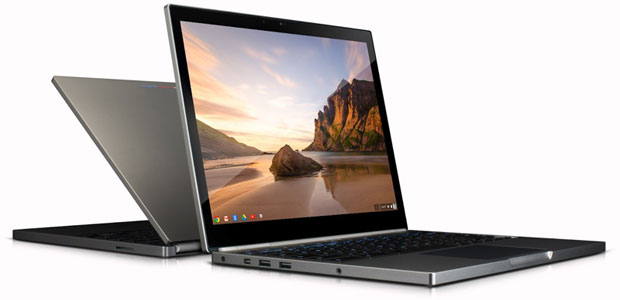
Google on Thursday announced the Chromebook Pixel, a branded touchscreen netbook with a price tag that consumers may balk at, considering the cost of rival offerings.
The Pixel will be available in WiFi-only and 4G LTE versions, priced at US$1,300 and $1,450, respectively. That pricing might prove to be a major problem, said Jeff Orr, senior practice director at ABI Research.
Chromebook Pixel
The Chromebook Pixel
"What's the market opportunity for a device that relies on always being connected that's going to drive a price premium?" Orr told TechNewsWorld. "I'm challenged by that."

Offering the Chromebook Pixel at a price higher than $1,000 "is like saying a netbook doesn't sell well at $200, so let's try $1,500," Rob Enderle, principal analyst at the Enderle Group said. "Even the premium-priced MacBook Air is cheaper."
Google did not respond to our request for further details.

The Pixel's Specs

The Chromebook Pixel's touchscreen is said to have the highest density available at 239 pixels per inch for a total of 4.3 million pixels.
The device's body is made from anodized aluminum alloy. Vents are hidden, screws are invisible and the stereo speakers are tucked beneath the backlit keyboard. The touchpad is made from etched glass.
The Pixel sports a 720p Webcam, three microphones and full-range speakers. It has an Intel Core i5 processor, solid state Flash memory and comes with 1 TB of Google Drive cloud storage.
The Pixel has industry-leading WiFi range, according to Google. The LTE version will use Verizon's network. Both versions come with 12 free Gogo Inflight Internet passes.
Various Google products such as search, Gmail, YouTube, Maps and Google+ Hangouts are integrated into the computer. The OS is updated automatically every few weeks.
The Chromebook Pixel can be pre-ordered in the U.S. and the UK from Google Play now, and will be available from Best Buy at a later date. The WiFi version will ship next week, and the LTE version will ship in the U.S. in April. Consumers can try out the device at select Best Buy stores.

No Fears From the Competition

"Ultrabooks priced at $1,500 aren't selling well, and for this price, typically the Intel i7 processor is used, not the less expensive i5," Enderle told TechNewsWorld. "WAN connectivity, a near requirement for the cloud-connected Chromebook, hasn't sold well in notebooks either, even with heavy subsidies that don't appear present in this product."
That high price makes it unlikely that any OEM, such as Samsung, will be worried about competing with the Pixel, he said.

A Target Audience With Deep Pockets?

It's not clear which market Google is aiming at with the Chromebook Pixel, said Carl Howe, vice president of research at the Yankee Group.
"Frankly, I don't really know who the audience is for this device, and I think that's Google's fundamental barrier to success with it," Howe told TechNewsWorld.
Chromebooks might be considered as portable thin-client products. That may explain why HP, the top seller of such solutions, is looking at them, Enderle said. However, "HP won't be selling someone else's hardware any time soon, so it's hard to see a successful end game for Google."
The Pixel "won't have native applications outside what Google offers, and I'm struggling with why people would want this solution compared to existing Chromebook devices which cost far less," Orr said.
The educational and business sectors, which are dominated by Apple and Microsoft, aren't likely to take to the Chromebook Pixel because "both segments are heavy on standards, making any new platform very difficult to sell," Enderle explained.
Both segments "tend to be really tight in terms of cash," he pointed out, "and the price of this thing could scare them off."

IE 10: It's Not Just for Windows 8 Anymore

IIE 10: It's Not Just for Windows 8 Anymoren what could be a boost for Microsoft in the browser wars, the company on Tuesday began offering Internet Explorer 10 to Windows 7 users, giving them the same enhanced Web surfing features previously available only to those who had access to Windows 8.

The company will automatically update Windows 7 users' browsers in 95 languages over the next few weeks, beginning with those running the IE 10 Release Preview.

"I'm excited that Microsoft has finally seemed to have gotten the point that they need to be current with browsers, and that they're updating the browser so much and that they're making it available to Windows 7," Mike Kaply, founder of Kaply Consulting, told TechNewsWorld. "There was some concern earlier that they'd just have IE 10 for Windows 8."
 
What's Under the Hood of IE 10?
IE 10 loads web pages 20 percent faster than previous versions. That performance includes pages from the most popular sites for news, social networks, search and ecommerce. The new browser also offers faster interactivity and JavaScript performance while reducing CPU usage and improving battery life on mobile PCs.

The browser also improves the performance of scalable vector graphics (SVG) and HTML4 constructs. Chalkboard test drives showed IE 10 on Windows 7 with a 15 percent performance improvement over IE 9. The browser also enabled faster rendering patterns and 30 percent better performance than IE 9 in the Speed Reading test drive.

When it comes to Java support, Microsoft's improvements to the Chakra JavaScript engine include profile-based just-in-time machine code, faster floating point operations, and faster object and property access. IE 10 on Windows 7 is 25 percent faster than IE 9 and 17 percent faster than other browsers on the WebKit SunSpider JavaScript benchmark.

Security and Privacy in IE 10
Web application security is improved with markup and support for HTML5 Sandbox and iframe isolation. Inline iframes place a second HTML document in a frame, and are used by malware authors as a way to attack PCs.

IE 10 offers Windows SmartScreen, which "has a better approach to the problem of security than letting users choose whether or not to accept ActiveX controls, by showing a Web surfer if a site has been reported to be unsafe," Darren Hayes, CIS Program Chair at Pace University, told TechNewsWorld.

Do Not Track is turned on in IE 10 for Windows 7. Internet Explorer has "a much better privacy policy than other Web browser services," Hayes said.

IE 10's Benefits for Developers
IE 10 offers support for developers to create rich visual effects with CSS Text Shadow, CSS 3D Transforms and CSS3 Gradient. It enables more sophisticated and responsive page layouts with CSS3. Its IndexedDB and HTML5 Application Cache are among the features that enable the creation of better offline applications through local storage.

The browser also supports new technologies such as CSS3 Positioned Floats, HTML5 Drag-Drop, File Reader API and HTML5 Forms, all used for building nteractive Web applications.

Stacking Up Against the Opposition
IE fell to second place among browsers worldwide between January 2012 and 2013, according to StatCounter.

Chartbeat's Percent of the Internet tool, which shows real-time browser market share, indicated IE had about 30 percent of the browser market compared to Chrome's 32 percent when checked Tuesday afternoon PDT. Mozilla showed 21 percent share with Apple at 14 percent. These figures were based on 5.7 million active browser sessions at the time.

The question is whether IE 10 on Windows 7 will give Microsoft a jump-start in the browser wars.

"At this point, the browser market is a complete tossup," Kaply said. "I think you'll see a lot of people trying IE 10 on Windows 7 and, if they like it, they'll get it."

Facebook Faces Lawsuit Over Like Button

Facebook Faces Lawsuit Over Like ButtonRembrandt Social Media is suing Facebook for its use of the Like button, according to the BBC.

Rembrandt claims that Facebook's success is owed, at least in part, to patents belonging to Dutch programmer Joannes Jozef Everardus van Der Meer, who died in 2004.

Facebook declined to comment, but a lawyer for Rembrandt, which owns the patents, said that the patents "represent an important foundation of social media."

Van Der Meer, who was awarded the patents in 1998, launched his own (unsuccessful) social network: Surfbook, a "social diary" that, according to Rembrandt's attorneys, allowed people to share information and approve data with a Like button.

UK Internet Folk: Cuts Doom Rural High-Speed Web
So-called "broadband campaigners" say that EU budget cuts, hashed out last week at an Union-wide budget summit, will doom high-speed connections to rural homes and businesses, according to The Guardian.

The budget for "rural broadband" was chopped by more than US$10 billion; it's now at $1.35 billion.

Certain spending cuts implemented by members of the European Parliament could be reversed when the budget is voted on in March or April, The Guardian noted.

The director of the Community Broadband Network said that "UK policy is being dictated by the big players."

The UK is notoriously sour toward European legislators in Brussels, but in this instance, there might be some agreement: Neelie Kroes, the European Commission vice president, also criticized cuts in broadband spending.

Potential VLC BitTorrent Streams?
Supporters of VLC, an ultra-popular media player known for its ability to read a variety of types of files, have set aside $10,000 to coax a developer into delivering code that would equip VLC with the ability to download and stream BitTorrent files, according to Torrent Freak.

So far, no media players are equipped to stream BitTorrent files, but Paris-based VideoLAN -- the parent of VLC -- is reportedly open to trying.

The technology boils down to designing code for a "working patch" for VLC. Several developers have delivered such codes, but they have thus far not been up to snuff.

British Tech Company Under Scrutiny
Regulators in Britain said that they will investigate the financial reporting of Autonomy, a British software company, according to The New York Times.

The investigation will look specifically at Autonomy's books before it was acquired for $11.1 billion by HP in 2011. HP has alleged that Autonomy inflated its sales and "carried out improper accounting practices" that misled the tech giant.

HP in November took a charge of $8.8 billion after it wrote down the Autonomy acquisition, according to The Times. Roughly $5 billion of that is related to what HP called "accounting and disclosure abuses" by the British company.

All Things Appy: Top 5 Android Kitchen Apps

Here's a look at some of the must-have apps for your kitchen.
Apps in this genre bring interactivity, crowdsourcing and reverse searching to the table.
About the Platform
Google's Android OS apps are available in Google's Play Store.
Browse to the Play Store in your smartphone by clicking on the app drawer icon. Then just search for the app.
No: 1. Cocktail Flow
Cocktail Flow claims 500,000 to 1,000,000 installs and has an average Google Play Store rating of 4.6 stars out of a possible 5 from 4,631 reviewers.

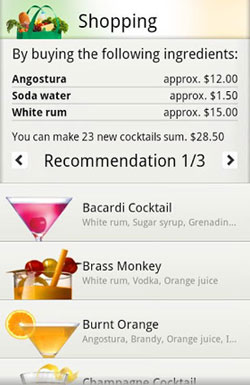
cocktail flowDistinction's Cocktail Flow features a cabinet system that lets you inventory your bar and then proposes cocktail recipes based on what you've got. The recipes display a list of similar drinks, so if you find one you like, you can experiment with variations on the theme.
This is functionality that really shows off the power of app over website or book.
Shopping suggestions for augmenting your bar, along with a budget guesstimate, tell you how many new types of cocktails you're going to be able to make after a trip to the liquor store -- and roughly how much it will cost.
The app's guides explain the essentials needed to get started with your cocktail creations -- from bar tools to garnishing techniques.
An animated screen, plus step-by-step preparation instructions round out the mix.
No. 2: iGrill
iGrill claims 1,000 to 5,000 installs and has an average Google Play Store rating of 3.5 stars out of a possible 5 from 47 reviewers.

An Android-based grill-monitor app, iGrill from iDevices uses Bluetooth to connect with a $70 hardware probe, letting you socialize while keeping an eye on the BBQ.
It's just one example of a hardware-and-app combo that we're seeing more of -- particularly in the personal fitness-monitoring arena -- and a great example of smartphone extension.
Preset food temperature settings can be customized, and a smoker with an optional ambient probe has upper and lower limit alarms that are designed for long meat and fish smokes.
No. 3: Fooducate
Fooducate - Healthy Food Diet claims 1,000,000 to 5,000,000 installs and has an average Google Play Store rating of 4.4 stars out of a possible 5 from 3,039 reviewers.
Scan barcodes of processed foods you've purchased or are considering, and gain intelligence on the product with the Fooducate app.
The app provides a calorie count-per-serving and interprets nutritional data giving comprehensible adjectives rather than cryptic numbers.
For example, it uses "Very high in saturated fats" rather than 7 grams and "Salty!" in lieu of 800-mg of sodium per serving. Good job.
No. 4: Recipe Search
Allthecooks.com's Recipe Search claims 5,000,000 to 10,000,000 installs and has an average Google Play Store rating of 4.3 stars out of a possible 5 from 17,036 reviewers.

An Editor's Choice app at the Google Play store, this app has 150,000 recipes with crowdsourced comments. An ingredients search provides recipe results based on ingredients. Chat and food topic forums complement the app.
As with app Cocktail Flow, apps like Recipe Search provide functions unobtainable from a static bookshelf -- like questions and comments from those who've tried the recipe.
No. 5: GrubHub
GrubHub Food Delivery/Takeout claims 500,000 to 1,000,000 installs and has an average Google Play Store rating of 4.5 stars out of a possible 5 from 7,532 reviewers.

Burn the toast? Forget the kitchen altogether and order in with GrubHub. Search for your current location, and get a delivery and pickup restaurants list.
The app claims more than 17,000 restaurants in 400 cities. Peruse the menu, view delivery charges, if any, and order.
This app also provides crowdsourced reviews of the ordering process. In one case, a favored in-dining local joint delivered unacceptably cold food to a user two hours late -- according to the app. Good to know.

OruxMaps Lets You Go as Far as Your Mapmaking Skill Takes You

OruxMaps Donate, a mobile app from Jose Vazquez, is available for US$2.62 at Google Play.
Have you ever considered becoming a cartographer? It's not as hard as you might think.

I've been trying out OruxMaps, a map viewer for Android that functions two ways. One mode is online with the usual suspects like Google maps, OpenStreetMap, and so on; the second and more intriguing method is offline with maps you've created yourself.

Creating your own maps, while not hard, is a project. The basic concept is that you take a paper map -- someone else's or your own -- and scan it to a PC as an image. You then calibrate that image with known geo-reference points that are understood by the map viewer and its GPS.

Trip-ups stem from the fact that the Earth is round, while electronic screens and paper are flat, so you need to come to grips with projections. There are hundreds of different types of datums.

Another issue is that there are multiple ways of entering the calibration data, all subject to interpretive error. Plus, there are obvious copyright concerns if you're using someone else's map.

I've been experimenting with desktop tools like OkMap, which help the 21st century mapmaking process.

The App
Jose Vasquez's OruxMaps Donate is $2.62 in the Google Play Store. There's also a free ad-supported version that you can try.

This app is a real mapmakers app. I've reviewed other map apps for LinuxInsider, including classy Backcountry Navigator, but none of those that I've seen thus far provide the map-geek flexibility of OruxMaps.

Online maps supplied with the app include Google and OpenStreetMap, as well as Chartbundle US Aviation, Google Earth and niche maps like OpenPisteMap.

I counted 36 different maps, including multiple overseas maps like UK Multimap and German Hike & Bike -- part of the OpenStreetMap project. All of the included maps can be cached offline.

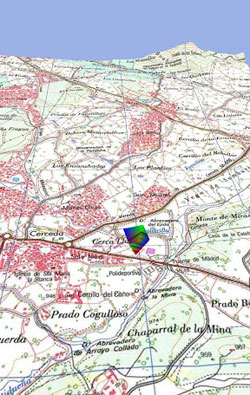
OruxMapsAmong OruxMaps' features: ability to display your position in 3D view; relief maps; trip computer; multitracking for following your friends; sharing position; barometer support; and multiple-route displays.

Neat tricks include an on-map night mode switch to dim the map and preserve night vision, plus heart-rate Bluetooth support.

Waypoint management is extremely comprehensive, with photo-waypoint functionality and geocache-specific settings.

Making a Map
I was able to load a map of a section of Southern California that I had created in Gian Paolo Saliola's OkMap for Windows, as well as one that I had made using the OruxMaps desktop conversion tool. They look fabulous -- just like commercially available online maps.

However, they both unfortunately got placed in China, within the app's scheme of things. Same latitude -- different continent. This was due to a datum mismatch totally unrelated to OruxMaps and due to my inexperience with Universal Transverse Mercator (UTM) datums. I won't bore you with the details. Suffice it to say, I need to read up on it some more. It is a project, after all.

However, I was able to create waypoints within my maps, which was highly satisfying -- despite the fact that they look as though they're on the wrong continent.

Greetings From China
Mapmaking has been an important part of mankind's development, and I recommend a sojourn into mapmaking for those interested in how we got to where we are.

This is one of funnest projects I've gotten involved with through an app, and I'm looking forward to getting the datum mismatch figured out. I intend to create a map and use it in OruxMaps for a spring Southern California desert road trip.

Hackers Clip Evernote, Forcing 50M Password Resets

Evernote, which makes software that lets users copy and store a variety of text and Web pages, announced over the weekend that it had been hacked, forcing the company to ask its 50 million users to reset their passwords.

The company said hackers gained access to usernames, email addresses associated with Evernote accounts, and encrypted passwords. Evernote has no evidence that any of the content users stored in its servers was affected, or that any payment information for its premium and business service customers was accessed.

The hack follows similar security breaches announced recently at Apple and Facebook. The cumulative impact of these incidents may force companies to consider stronger authentication methods other than usernames and passwords.

"There continues to be a real risk [to companies] of employees using free, public cloud solutions like Evernote, which puts an organization at risk for data leaks," Rama Kolappan, director, mobile product marketing and management at Accellion, told TechNewsWorld.

"Companies and users need to realize that security is not a one-size-fits-all situation," Richard Wang, manager of SophosLabs US, told TechNewsWorld. "The appropriate authentication mechanism should depend on the security of the data being protected."

Evernote did not respond to our requests to comment for this story.
How Evernote Responded to the Breach
In addition to posting information on its blog, Evernote is requiring all users to reset their account passwords. Users will also need to enter the new password in other Evernote apps. The company is updating several of its apps to make the password change process easier.

Evernote also urged users to avoid using simple passwords based on words in dictionaries; avoid using the same password on multiple sites or services; and to never click on "reset password" requests in emails. Users should go directly to the service where the password needs to be reset.

However, Evernote contradicted its own advice by including clickable links in the email it sent out to users warning them not to click on password reset requests sent in emails. The company's links take users to a site called "mkt5371" rather than to Evernote's website. "Mkt5371" is a domain owned by Silverpop, an email communications firm Evernote is using to send out emails to its millions of users.

"If a service I used displayed that message, I would assume someone was trying to hack my account," Alex Horan, security strategist at Core Security, told TechNewsWorld. "They should have issued a clear message to show they were on top of the situation and to keep people calm. I agree with the action Evernote took -- resetting everyone's passwords -- but I think they created more confusion by making it seem like the user had issued a password reset."

How Companies Should Protect Users
Hackers Clip Evernote, Forcing 50M Password ResetsFirms like Evernote should ensure that users have access to basic privileges, Wang said. This will minimize the damage an attacker can do.

Companies should also implement two-factor authentication where appropriate, especially for remote access from non-company resources.

The two factors should be different types of information, and should not be in the same category. "For example, passwords and security questions are both something you know, and therefore are both subject to similar attacks," Wang said. The two factors could be something a user knows and something the user has -- such as a mobile phone -- or a unique aspect of their identity, such as biometric information.

Multi-factor authentication, ensuring users are connecting from a trusted or corporate device, and monitoring login attempts are ways companies can secure user accounts, Haro said.

"Monitor both login failures -- to detect someone who compromised a user list and is trying to brute-force accounts -- and successes," he noted. "For example, if for the past four years I have logged in from a Boston IP address at around 9 a.m. every weekday morning, and I am suddenly logging in from China on a Sunday, that should be flagged and investigated."

There is no security panacea, Wang added. "As long as there are people on the other side trying to break in, there will never be a completely secure system."

Nearly a Million iOS Apps and Discovery Still Sucks

Nearly a Million iOS Apps and Discovery Still SucksThere are well over 800,000 iOS apps in the App Store, 300,000 of which are native to the iPad, and I'm constantly surprised and irritated at Apple's inability to help its customers discover great apps. Of course, maybe it's just me. Maybe I'm the only one who actively goes into Apple's various App Store points of entry -- iTunes, iPad and iPhone -- only to walk away without downloading anything.

I also spend more time online than I care to admit, tooling around the online Apple universe -- and still, it seems like I just get lost in app reviews and news of things like Temple Run 2, which more than 50 million people managed to find and download. Maybe really great apps are all being found, and that as I look and look and walk away vaguely dissatisfied, maybe there's something inherently wrong with me.

More Than Room for Improvement
Here's what I don't understand: Apple is a freakishly large company that's focused on creating the very best consumer experience. It has resources -- billions of dollars and very smart employees -- and it has a vision of excellence. All of the apps in the App Store have to be managed somehow, and they have to be managed with a database. Databases are pretty amazing things -- and yet, the front-end to the App Store is woefully dumb.

Let's consider iTunes. First, Apple seems to be trying to put humans behind the discovery effort by letting editors select "Editor's Choice" apps. They also showcase a couple dozen "New and Noteworthy" apps. Then there's "What's Hot" and other topical, pithy, or fun categories like "Awards Season" or "Great Game Soundtracks."

These curated app collections are pretty good. Apple does about as good a job at it as I can imagine. The company has to create tame collections that won't offend anyone, freak out parents, or be confusing to the masses.

Hide? Sort? Filter?
The search works pretty well if you know what you're searching for. Search is not really for discovery though. Search is not about browsing. We can sort by iPhone or iPad apps. That's handy. There are about two dozen categories we can sort through -- like education, finance, games and news. Each of these has a What's Hot and New and Noteworthy list. Plus, there are more Apple editor-curated lists, like High School Zone within the Education category.

Within these categories, we can sort of drill down into 200 of the Top Paid Apps, the Top Free Apps, and the Top Grossing Apps.

So why do I feel like I'm wasting my life as I search for amazing new apps? Is it that there really are only a few hundred great apps at any one time and that there are just hundreds of thousands of apps that are either irrelevant for most people or just so bad that no one wants them at all?

The sheer effort of managing nearly a million apps is hard for most people to grasp. It's not an easy challenge. Imagine owning a small retail store in a mall and trying to find a good way to display a few thousand products on just a single wall of shelves. Yet I think improvements are not only needed, but doable.

What could be some relatively easy fixes? What might be some solutions that wouldn't require a wholesale recreation of a new App Store?

Hide That App, Please
Some apps are immensely popular, but I know I'll never buy them and never download them. I will not download Clear Vision. I won't download Fruit Ninja. I am not going to play Scribblenauts Remix, and I'm not ever going to pimp my screen or call Elmo.

If I could click or tap on a little "X" button on their icons and hide them from my view -- effectively giving a dynamic Top 200 list more spots for interesting apps to slide up into -- I would be very happy. This alone would be a huge boon.

To amp up this notion just a little, how about the ability to hide all the apps you've already downloaded? Suddenly a Top 200 list would have a lot more relevance to you personally, would it not?

What if you could hide categories that you don't want to look for? Like Games. If you could hide all the crappy games designed to create habit loops of addiction in small children . . . that would free up a heckuva lot of app discovery real estate. I'd call this an Exclude feature.

Can't you already exclude Games by browsing through other categories? Yes, but the point is to be able to browse multiple categories at the same time while eliminating the categories you don't want, like Games, Weather, Catalogs and Navigation. I'm not buying any new navigation apps anytime soon. I have several apps that do what I need really well and I don't want others. Same goes for Weather. I'm sure other people wouldn't mind eliminating Finance or Sports while they're looking for something new and surprising.

App Store Search APIs?
Of course, you'd think that Apple might provide some APIs that would let third-party developers search Apple's App Store and provide results. Apples does through its affiliate programs, and there are app-focused websites that provide reviews and information.

From what I've seen so far, though, they all turn me off. They're astoundingly cluttered and seem to work hard at just pulling the same old information into their Web pages in the hope that someone will click through and they'll earn some sort of affiliate commission. Some have real reviews, but if you care about volume, this means you'll be running into an awful lot of game, game, game reviews.

Is there a website that lets you select truly useful filters to help you discover apps on a regular basis? Is there a site that lets you filter out the noise and generate a Top 100 list that doesn't have a single game on it? If so, I don't know where it is. It seems to me that the economic considerations of the app world make it tough for third parties to be successful in the world of app curation.
 

The Dollars Are in the Details - and the Details Should Be in CRM

The Dollars Are in the Details - and the Details Should Be in CRMThe devil is in the details, the saying goes. When it comes to B2B selling, the dollars are also in the details.
That's something I learned many years ago while writing about the reseller channel. Back in 2000, the Internet caused significant disruptions of traditional reseller relationships, because many large technology vendors expected online sales to eliminate the need for resellers. They tried to sell direct, but failed to grasp the value that resellers provided to their end-user customers. So in 2000 and 2001, they tried to win back their jilted resellers.
The result was a bit of a free-for-all as large vendors tried hard to woo major resellers. The lengths they went to were astounding, costly, and -- all too often -- fruitless.

A Chip Shot Wins the Sale
One reseller of note allowed me to quiz him about what he'd been subjected to in this process. He'd finally gone with HP as his primary hardware vendor. Why? Was it because he'd been flown out to the HP World show in San Francisco and immersed in the company's ecosystem? Was it the conference in Orlando that exposed him to HP's long-term vision? Was it the in-depth examinations of the product that HP managers had given him?
No.
What turned the tables was that HP's channel manager had taken him golfing.
No other vendor had spotted the fact that this reseller was a huge golf nut. From the autographed photos of PGA pros in his office, to the golfing trophies on the shelf, to the bag of clubs propped in the corner -- the signs were all right there. But no one picked up on the details.
Send Me a Signal, Throw Me a Line
How effective are you at spotting the signs?
This is really an old school sales talent; the cold read that can build instant rapport if done right. In the digital era -- and this extends back 15 years -- we have come to depend on technology to sort, order, and prioritize data about customers. Too often this data is centered on the seller's business: How did a prospect react to our marketing piece? How often did the prospect visit our website? Which pieces of our content did the prospect download? All of this is useful, and it can take you a long way down the sales relationship toward a closed deal.
It leaves out the buyer, however, and the things about him or her that make them unique. Without spotting these details, you're fighting the battle with one hand tied behind your back. If you can discover those details and act on them, you can demonstrate that you care about the buyer as a person, that you bother to notice things about him or her, and that you're there as more than a salesperson.
Digging Up the Details
This is where social media and social CRM can be such tremendous resources. In the past, salespeople had to be skilled at the cold read once they reached their prospects' offices. These days, a few minutes on LinkedIn, Facebook, or Twitter often reveals key details about prospects, and in a more complete and contextual way than sales pros had access to in the past.
If you can incorporate these details into your customer records within CRM, they become an ongoing aspect of your relationship with that customer. Better yet, you can build in time-based aspects of a customer's details. If he was planning to go on a vacation, or if she was looking forward to a child's graduation, you can note that and mention it during your next call with the customer. These details can help you get that first sale -- but they're even better at making sure you get all the sales that come after that.
In this era, the most successful sales pros are not the ones who care most about closing sales. They're the ones who care most about their customers, and solving their customers' problems. Building relationships is critical to that, and the details are critical to building the relationships -- but few among us can keep an encyclopedic knowledge of our customers' personal details in our heads.
CRM can give your memory that boost -- if you choose to use it that way.

HOW TO: Seamlessly Sync Photos Between Android and PC

Step 1: Get Your App
Install a free cloud-storage app with photo-upload functions onto your smartphone by performing a search for either Dropbox or SugarSync in the Google Play store.
Both of these cloud providers have seamless photo upload functions. There may be others too, but I've thoroughly tested these providers' apps for this purpose, and I can recommend them.
Tip: Ensure that you have some form of wireless connectivity on the smartphone -- either WiFi or cellular network.

Step 2: Create an Account

Allow the app to download onto the device and then open the app. Complete the sign-up process, which involves entering an email address and creating a password. Both apps provide some free storage, which will be enough for some experimentation.
Tip: Check your in-box for an account verification email on signup.

Step 3: Set to Sync

Navigate to the settings menu within the app on the smartphone. SugarSync uses a cogwheel-like icon and Dropbox uses a textual drop-down menu item.
Choose Turn on Camera Upload in Dropbox or Autosync Photos in SugarSync.
Tip: Ignore the Photo Optimization option in SugarSync. It has reported issues on some devices.

Step 4: Log In

Browse to the Dropbox or SugarSync websites on the computer where you'd like to view your images seamlessly. Enter any login information if prompted to do so. Use the same login as you did creating the account.
Tip: Ignore any prompts to download the respective PC applications for now. Ensure that you have some form of wireless connectivity active on the PC -- either WiFi or cellular network.

Step 5: Snap a Pic

Capture a test image on the smartphone by taking a photograph as you'd usually do.
Wait a moment for a seamless upload to take place, and go back to your PC. Browse to the Photos tab within the SugarSync home page on the PC, or the Camera Uploads tab within Dropbox's home page on the PC.
You'll see the image within the folder on the PC.
Leave these settings as they are, and and in the future, every time you take a picture on your smartphone, it will upload when connected to a network.
Then browse to the respective cloud provider's home page, log in, and the images will be available on the PC.
Tip: The uploading of images from a smartphone uses data allowances set by your Internet Service Provider. This is usually not an issue using WiFi at home. However, it can be costly when roaming internationally.

Step 6: See What You Can Do

Play with the camera upload sharing settings from within the PC-based Web page. For example, right-click on Camera Uploads in Dropbox to invite others to the folder.
Setting up Dropbox on a family member's computer allows you to instantaneously and seamlessly share vacation pictures -- before you get back.
And that's the Last Mile.